Thermoforming Packaging Systems
01 Mayıs
01 Mayıs 2026

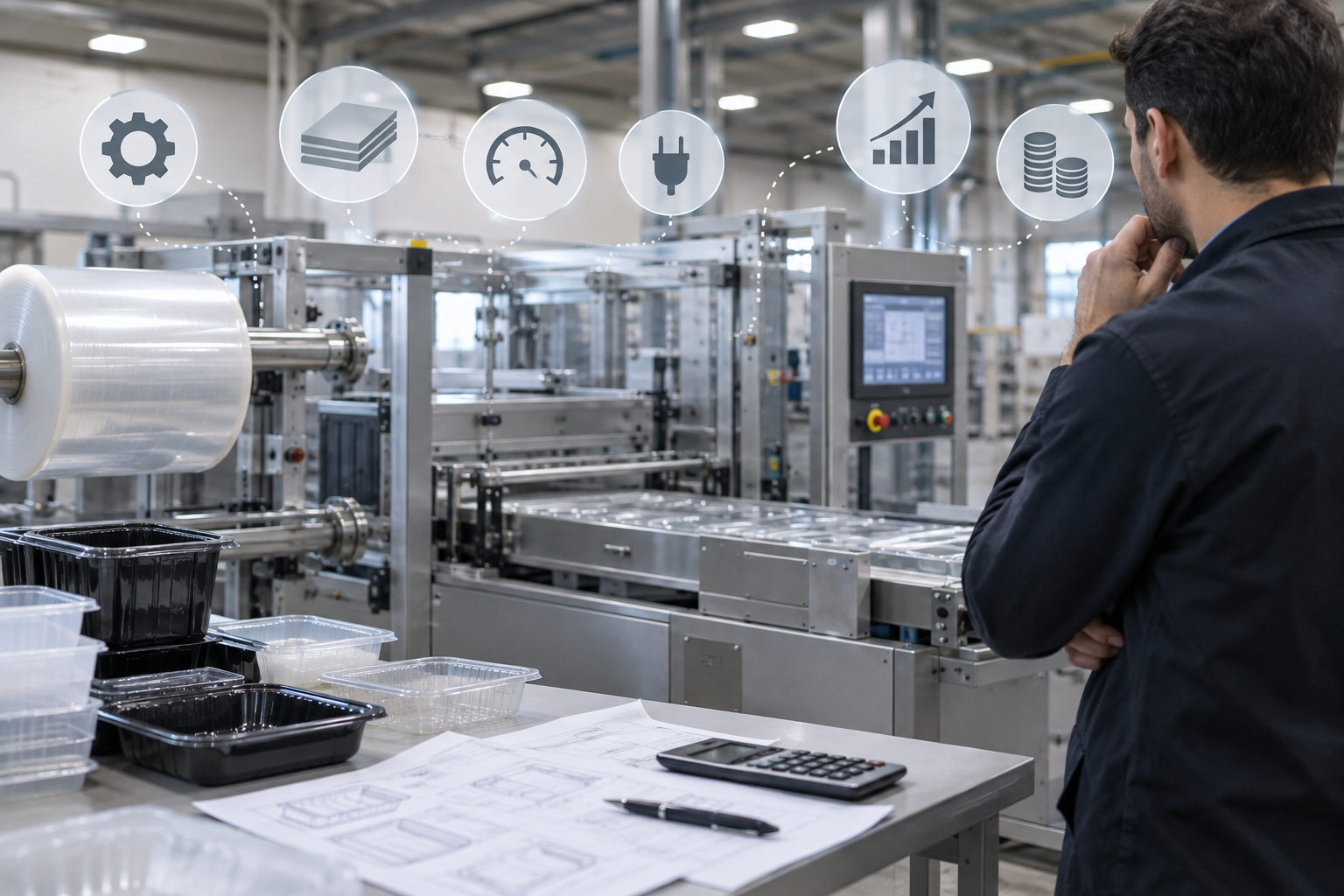
A thermoforming machine is a significant investment for any food, medical or industrial packaging line, and its price can vary widely from one supplier and configuration to another. Rather than a single number, the final cost depends on a combination of technical and operational factors — understanding them helps you compare quotes accurately and choose a machine that matches your production line, not just your budget.
The number of cycles per minute a machine can run, and the number of cavities formed per cycle, has the biggest impact on price. A high-throughput line built for continuous, large-volume production costs more than an entry-level machine designed for growing production lines, such as the Starter Series.
Fully automatic thermoforming lines — with automated film handling, product loading, sealing and cutting — reduce labor costs and increase consistency, but they carry a higher upfront price than semi-automatic setups. The right automation level depends on your current output needs and how much manual intervention your team can realistically manage per shift.
Machines configured for Modified Atmosphere Packaging (MAP) or standard vacuum sealing require additional gas-flushing, sealing and control components compared to machines without this capability. If your products need extended shelf life without preservatives, this is a cost factor worth budgeting for from the start.
The film reel width your line needs to run, the depth and complexity of the forming mold, and whether you're producing simple trays or multi-compartment, custom-shaped packaging all affect tooling cost. Custom molds for specialized formats — such as those used on the Bph-S Lineer for linear tray sealing — typically cost more than standard mold sets.
If your product is liquid, semi-liquid or requires precise dosing across multiple compartments, an integrated filling system adds to the overall machine price. Beverage, dairy and ready-meal producers often need this integration built into the line from day one rather than retrofitted later.
Medical and pharmaceutical packaging lines need cleanroom-compatible construction and validated sterile-barrier sealing, which adds cost compared to standard food-grade machines — see the Bpz 400 Medical for an example of this kind of configuration. Similarly, water and juice cup-filling lines like the Bpt Series are priced according to fill-and-seal speed rather than tray forming complexity.
The grade of stainless steel used in the frame and product-contact parts, the quality of the heating elements, and the precision of the mold machining all influence both price and long-term durability. A lower upfront cost can mean higher maintenance costs and more downtime over the machine's lifetime.
Installation, operator training, warranty terms and the availability of spare parts and technical support in your region are part of the total cost of ownership, even though they aren't always reflected in the sticker price of the machine itself.
Because pricing depends on your specific product, output target and packaging format, the most reliable way to get an accurate number is to share your requirements directly with a manufacturer's engineering team rather than relying on a general price list. Betapak's team can help match the right thermoforming machine configuration to your production line — get in touch to request a quote for your project.